
About 60 per cent of Indian private insurers believe there has been a significant rise in insurance-related frauds, and as risks lurk there is an immediate need to consider a proactive fraud risk management framework, a Deloitte survey said on Thursday. Insurance companies in India have experienced a rise in fraud instances in life and health insurance, and increased digitisation, remote working post pandemic and weakened controls are key factors contributing to frauds, according to Deloitte's Insurance Fraud Survey 2023. "About 60 per cent of survey respondents believe that there has been a significant rise in fraud, while further 10 per cent experienced a marginal increase," the survey said.

A Deloitte survey reveals that Indian Gen Z and millennial professionals are rapidly adopting AI tools in the workplace, surpassing their global counterparts in usage and confidence, while also facing financial pressures and shifting workplace expectations.

A Deloitte report reveals that Indian enterprises are leading the world in large-scale AI adoption, but are facing a significant skills gap in AI expertise.

A senior Microsoft executive says India is uniquely positioned to lead the next phase of global AI deployment, driven by a massive developer base, rapid enterprise adoption, and robust digital public infrastructure.

65 per cent of Gen Zs and 63 per cent of millennials feel worried about the environment and are willing to pay more for sustainable products or services.

'Decisions on talent and rewards have shifted as employees and companies are operating in a buyer's market across most skill categories.'

Taxpayers should consider ITR-U if they omitted income, wrongly claimed deductions or exemptions, or made reporting errors that led to a shortfall in tax payment.

The Indian economy recorded a six-quarter high growth of 8.2 per cent in July-September, as factories churned out more products in anticipation of a consumption boost from the GST rate cut, according to government data.
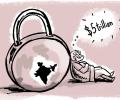
Foreign Direct Investment (FDI) is critically important for India to become a $5 trillion economy, Deloitte CEO Punit Renjen said while noting that over two-fifths of the 1,200 business leaders surveyed in the US, UK, Japan and Singapore are planning additional or first-time investments in India. Referring to the survey, he said India continues to be "one of the most attractive" FDI destinations. "Despite the COVID-19 destruction, inflows hit a record high last year. "Business leaders, whom Deloitte surveyed, are preparing to make additional and first-time investments in India," Renjen said.

Corporate India handed over an average increment of 8 per cent in 2021, and early estimates reveal that average increment for 2022 is expected to increase to 8.6 per cent in line with a healing economy and improving confidence, according to a Deloitte survey. As per the second phase of Deloitte's Workforce and Increment Trends survey 2021, 92 per cent companies gave an increment in 2021 at an average of 8 per cent, compared with only 4.4 per cent in 2020, where just 60 per cent companies had extended a pay hike. For 2022, average increment is expected to increase to 8.6 per cent, at par with the pre-pandemic levels of 2019, the survey said, adding that about 25 per cent companies surveyed have projected a double-digit increment for 2022.

'Corporations that were recruiting 15 or 20 [students] have reduced the number to two or three.'

Wouldn't it be better to reach 45 with a backup engine of passive income that helps you glide through these years instead of grinding, asks Ramalingam Kalirajan

A vast majority of the business leaders believe that the Production Linked Incentive (PLI) schemes have been beneficial and expect an extension to other sectors in the coming years, a Deloitte Survey said on Friday. An overwhelming number of survey respondents hope the budget will fuel growth across industries by building strong domestic demand and focussing on capital expenditure and believe that it would define the 'Amrit Kaal'. "Critical to this growth will be the pace of capital expenditure, infrastructure development, and the need to boost infrastructure financing through private partnership. 60 per cent of respondents suggested raising funds through Indian Government Bonds," the survey said.

India remains an attractive investment destination even as taxation uncertainties pose a challenge, according to global consultancy Deloitte.

Chief financial officers in the country are cautiously optimistic about the future and are neutral about their companies' performance in the short term, said the Deloitte India CFO Survey 2013.
India Inc is expected to offer average salary increments of 11.3 per cent this fiscal and those working in sectors like pharmaceuticals, health care and life sciences are expected to get a raise of 13.1 per cent.

According to eighth annual "Deloitte Volunteer IMPACT Survey" reveals that 37 per cent of employees surveyed globally who frequently participate in workplace volunteer activities are more likely to be satisfied with the progression of their career.

About 65 per cent of the CFOs are positive about India's growth

There have been almost no year-on-year changes in market share within the Big Four.

According to the survey of around 2,100 business professionals, 56 per cent of the respondents think more financial statement frauds will be unearthed this year and in 2011 than the last three years combined.

The main issues confronting CFOs currently, according to Deloitte, are the current economic slowdown, a depreciating rupee and inflation.

Real, Barca topple United off perch to become top earning clubs

It added that in the last four years, the number of CEOs earning more than Rs 20 crore has doubled. The survey titled 'Deloitte India Executive Performance and Rewards Survey 2024', based on the analysis of 400 organisations (except public sector companies), said that 75 per cent of all CEOs in India now earn more than Rs 5 crore annually. This was 66 per cent in 2020.

Leading FMCG firms reported a nearly two-fold increase in the share of quick commerce within their total e-commerce sales, and this surge is anticipated to continue, said a joint report by Deloitte and industry body FICCI. Quick Commerce, also known as hyperlocal delivery, is now reaching around 35 per cent of online sales and has become a preferred channel for urban consumers. "About 18 per cent of consumers prefer purchasing food and beverage items from Q-commerce channels.

An overwhelming majority of Indians (84 per cent) feel it is safe to return to their workplaces, according to a Deloitte survey that suggests consumers in India are showing a positive spending intent and brighter outlook towards the future. The latest monthly analysis (wave 220) of Deloitte's Global State of the Consumer Tracker, signals a cautious consumption revival in the country, aided by the decreasing number of Covid-19 cases and an improved vaccination drive. The Global State of the Consumer Tracker is an online survey based on responses from 1,000 people each in 18 countries including India.

The survey was based on the survey of 44 banks.
These companies, the study said, will have to either dip into its cash balance or borrow in short term.

In a move towards gender inclusion, Tamil Nadu has partnered Godrej Consumer Products (GCPL) to offer a 5 per cent job reservation for LGBTQAI+ and people with disabilities at GCPL's upcoming fast-moving consumer goods manufacturing unit in Thiruporur in Chengalpattu district. According to industry experts and activists, while companies acknowledge transgender communities, this is the first time the entire spectrum of gender minorities, including lesbian, gay, bisexual, transgender, queer/questioning (one's sexual or gender identity), asexual and intersex, is receiving such a notable share of job participation in the private sector while signing memoranda of understanding with states.

Theft, bribery and corruption, and regulatory non-compliance are the top three frauds

The Ministry of Micro, Small and Medium Enterprises (MSME) has received "positive" feedback from industry regarding the 45-day payments cycle for MSMEs, according to a senior official familiar with the matter. The comment assumes significance amid concerns raised by some MSMEs that big companies may stop buying from small and medium suppliers and instead choose to make purchases from unregistered enterprises.

'The noise that we are hearing is because the five big IT players are not hiring significantly.'
The government of Gujarat has been projecting its industrial growth as a model for other states but it does not appear so industry-friendly in the number of labour laws one needs to comply with, shows a survey.
Work-related stress can impact one's mental health. Which is why Saurabh Tiwari says he's fortunate that his company understands this and is doing whatever it can to help mitigate that stress. "My company provides opportunities according to my interest, and if anyone is feeling stressed or has additional workload, they can talk with their supervisor to resolve it," says the 31-year-old who's working from home for a Bengaluru-based IT firm. Not everyone's as lucky.

'Three manufacturing sectors can create jobs by the million: Apparel, food, and electronic assembly.' 'Let's talk to them and ask them what it would take to scale by a factor of ten,' suggests Naushad Forbes.

Fitch Ratings on Tuesday raised India's growth forecast for the current fiscal to 7.2 per cent, from 7 per cent projected in March, saying elevated consumer confidence will drive spending, besides increased investments. In June update to its global economic outlook report, Fitch said it expects inflation to decline to 4.5 per cent by end of this year and RBI to cut policy interest rates by 25 basis points to 6.25 per cent.

They, however, remain cautious in resuming aggressive capital spending.

Brokers believe that the higher charges may not completely deter investors from taking bets in F&O but could help cool down some activity, as the threshold to break even rises.

The empowered committee on GST headed by West Bengal finance minister Asim Dasgupta has agreed to a dual structure of the proposed indirect tax regime, which is likely to be introduced from April 2010. The new tax regime would do away with most of the indirect taxes levied at the Centre like excise and services tax, and VAT and Octroi at the State level.

The average variable pay across sectors is projected at 17.4%.

No longer a discretion of the tax administrator, the audit of returns filed by taxpayers is now based on a selection by algorithms, notes Tarun Bajaj.
